



Umpqua Bank recently conducted a mid-year survey of small and midsized businesses across the Oregon on their 12-month economic outlook, growth plans, and response to tariffs, generative AI and cybersecurity.
While general optimism and plans for growth are somewhat muted by economic uncertainty and potential tariff impacts, decision-makers are relatively confident in their prospects for continued success. Compared with businesses operating in other parts of the country, they are growth-focused and leading in generative AI adoption, while prioritizing investments that create efficiency and protect working capital.
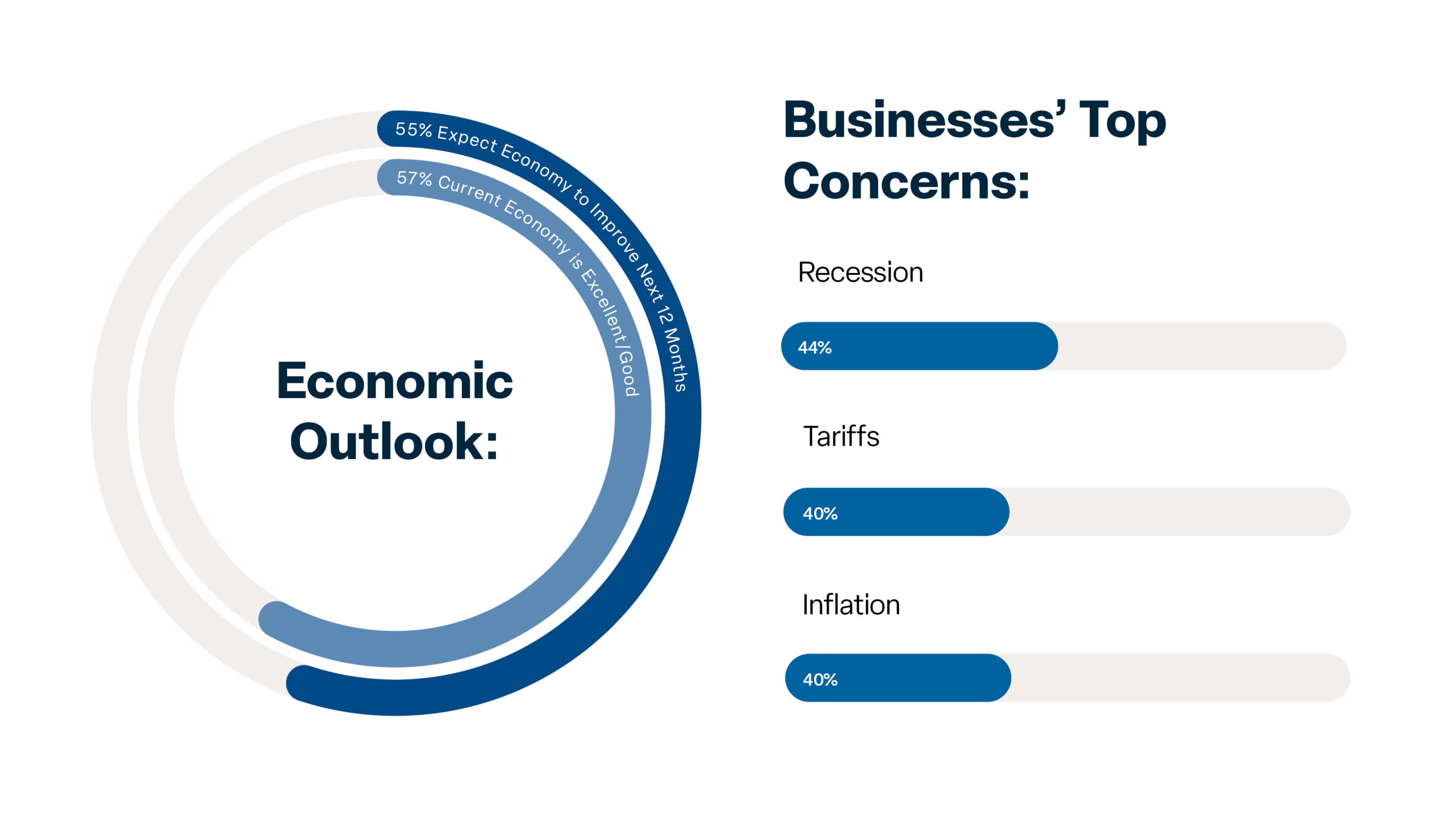
A majority (57%) of area businesses surveyed rate the current economy as excellent or good; 55% also expect the economy to improve over the next 12 months—well above the national average (47%).
Recession ranks as the top overall concern for area businesses, followed by inflation and tariffs.
Adjusting to Tariffs, Trade Uncertainty
In response to tariffs, many have already taken measured steps to manage potential impacts. Rather than making wholesale changes to foreign operations or supply chains, businesses have been planning for a range of modest actions, including price adjustments, negotiating costs with suppliers, looking for additional sources both domestically and internationally, and accelerating sales timelines, among other strategies.
For those with facilities or sourcing operations abroad, the prospect of tariffs is having limited impact on near-term decisions to reshore operations or source materials domestically. In fact, nearly 9 in 10 leaders surveyed still plan to maintain or increase their current levels of foreign trade activity and exposure over the next 12 months.
Balancing Growth Expectations and Financial Challenges
Oregon businesses continue to balance relative optimism and expectations for growth with managing financial concerns.
They are upbeat about business prospects over the next 12 months, with those surveyed much more likely to prioritize making investments than cost-cutting. Many expect increases in demand for products and services (62%), revenue (53%), profitability (41%) and the number of employees (34%). Simultaneously, managing financial challenges, including the need for expanding markets, is most cited as the key to success.
Investment priorities reflect the balance between growth opportunities and financial management. Top priorities include investing in digitization to improve efficiency (90%) and accessing capital to finance expansion (67%). Two thirds of respondents also cite tools to protect payment systems, making significant changes to products or services and expanding their real estate footprint (51%).
“Businesses remain focused on growth, while moving ahead with caution,” says Amy Davis, Umpqua Bank’s Director of Retail Business Banking. “They are being strategic in their investments, prioritizing efficiency and being responsive to uncertain market dynamics.”
Leading on AI and Cybersecurity
AI remains a top investment priority for Oregon businesses, with 77% likely to invest or expand AI tools over the next 12 months. They’ve made significant progress implementing AI technology, and a strong majority feel confident in their pace of adoption compared to peers (60%). About half (48%) also report that, at least right now, AI implementation has actually led to increased staff levels, compared to 9% reporting a decrease. Leaders cite AI’s positive impact on improved decision-making, productivity and profitability as fueling the increase.
Cybersecurity and related fraud are also top of mind, and businesses are taking steps to combat related threats. In the last 12 months, most have prioritized cybersecurity and anti-fraud enhancements by tightening internal controls (73%), using bank fraud prevention solutions (69%), emphasizing employee training (66%) and conducting regular audits to identify vulnerabilities (59%). While 83% feel at least moderately well prepared to prevent an attack, just 4 in 10 feel very well prepared.
“To combat cybersecurity and fraud, companies need to adopt a culture of a proactive defense,” says Kathryn Albright, Umpqua Bank’s Head of Global Payments and Deposits. “Simple measures go a long way at protecting the entire operation. Regularly train employees on the latest schemes. Look at your internal controls, conduct regular audits to identify vulnerabilities and use bank fraud prevention solutions.”
To download Umpqua Bank’s 2025 Business Barometer report on U.S. small and midsize businesses, visit umpquabank.com/
Umpqua Bank is a leading regional financial institution supporting businesses of all sizes and consumers across eight western states. With more than $50 billion in assets, Umpqua is the largest Northwest-based and third largest publicly traded bank on the West Coast.