



SALEM, Ore. — The emerald ash borer, an invasive beetle responsible for killing hundreds of millions of ash trees across North America, has been confirmed in Salem for the first time.
The Oregon Department of Forestry also announced new detections in Beaverton, Bethany Lake Park in the Rockcreek area, the Oregon Garden in Silverton and along the Banks-Vernonia State Trail. The state trail discovery is the first confirmed detection of the insect in an Oregon state park.
Jackson Bottom Wetlands Preserve in Hillsboro has also reported a suspected detection that is awaiting state confirmation.
The new beetles were discovered after traps placed this spring were checked in July. In Salem, city employees found a suspected emerald ash borer in a trap near West Fork Pringle Creek in south Salem. The Oregon departments of Forestry and Agriculture later confirmed the identification.
The emerald ash borer, commonly called EAB, attacks and kills ash trees by feeding on the living tissue beneath their bark. The beetle can also infest olive and white fringetrees.
EAB was first detected in North America near Detroit, Michigan, in 2002. Since then, it has become what forestry officials describe as the most destructive forest pest in North American history.
The insect was first found in Oregon near Forest Grove in June 2022, making Oregon the first West Coast state to confirm an infestation. It has since been detected in Washington, Clackamas, Marion, Multnomah and Yamhill counties.
The insect had previously been found in Woodburn and other parts of Marion County. Marion County has been included in a permanent quarantine area since 2024.
Once EAB becomes established in an area, officials say it cannot be eradicated. Efforts instead focus on slowing its spread and protecting healthy, high-value trees.
The City of Salem has been preparing for the beetle’s arrival for several years. An inventory identified nearly 4,000 ash trees along city streets, in parks and within more than 400 acres of natural areas containing large concentrations of Oregon ash.
Salem has stopped planting new ash trees, begun removing unhealthy trees and developed management plans for ash trees on city-owned property. The city has also published an Emerald Ash Borer Readiness and Response Plan.
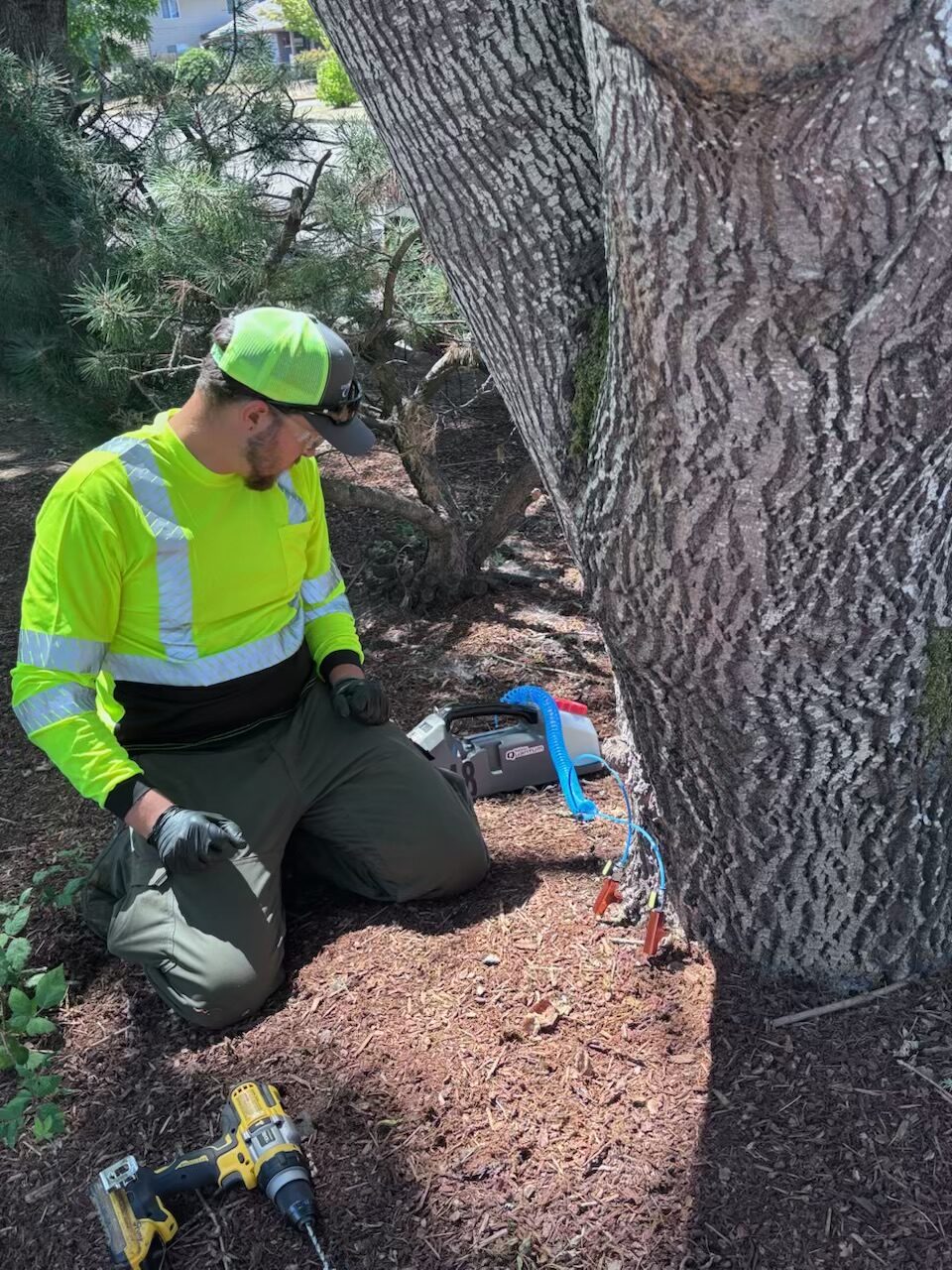
Approximately 600 healthy ash trees in northern Salem were injected with insecticide beginning in the summer of 2025. Plans call for treating approximately 600 additional trees. The treatment must be repeated every two to three years but can protect healthy trees throughout their natural lifespans if it begins before the trees are seriously damaged.
The city also plans to plant other native and appropriate species around ash trees in natural areas and replace removed trees with a variety of species. The goal is to maintain Salem’s tree canopy while making it more resistant to future pests and diseases.
State forestry officials are asking residents not to transport firewood or other ash materials more than 10 miles from where they were collected. Ash, olive and white fringetree materials should not be moved outside the state quarantine area, which includes the Marion County portion of Salem.
Signs of an EAB infestation include thinning or yellowing leaves, splitting bark, shoots growing from the trunk or branches and distinctive D-shaped exit holes in the bark.
Anyone who believes they have found an emerald ash borer should first compare it with common green insects that resemble the beetle. Residents are encouraged to capture the insect in a container if possible or take a clear, close-up photograph.
Suspected sightings can be reported to the Oregon Invasive Species Hotline at 1-866-INVADER or through its online reporting system.
Property owners with healthy, valuable ash trees may consider having them treated by a licensed pesticide applicator. Officials say trees that are already unhealthy, growing in unsuitable locations or unlikely to receive continuing treatment may need to be removed and replaced with species not vulnerable to EAB.
More information about identifying the beetle, protecting trees and preventing its spread is available at OregonEAB.com.