



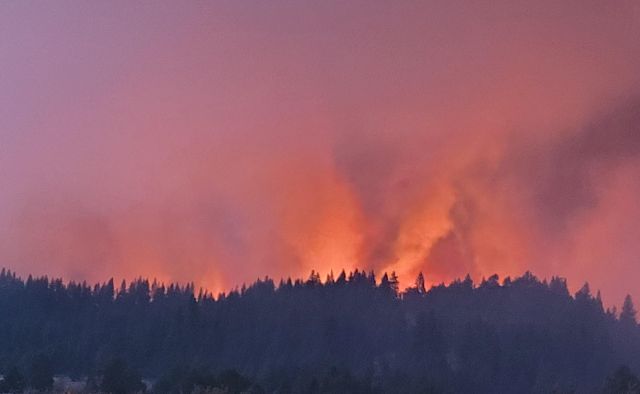
Oregon’s record 2026 wildfire season has burned more than 2.6 million acres, but the true cost will be measured in more than scorched land and firefighting bills.
It will also be measured in canceled vacations, empty hotel rooms, lost restaurant sales, closed recreation areas and years of work needed to restore forests, grazing lands and damaged communities.
The final price will not be known for some time. Fires are still burning, property claims have not been completed and land managers have only begun assessing the damage.
Oregon’s previous record season offers some indication of what lies ahead. Nearly 1.94 million acres burned in 2024, generating more than $350 million in fire-response costs. The state called lawmakers into special session to provide $218 million to help pay outstanding bills.
The smaller 2025 season still generated nearly $130 million in gross suppression costs.
Those amounts cover only the response. They do not include all the homes, timber, fences, livestock forage, utilities and other property damaged by fire—or the revenue businesses lose when smoke, evacuations and road closures keep visitors away.
TOURISM LOSSES SPREAD BEYOND THE FIRE LINE
Tourism is particularly vulnerable because a fire does not have to reach a business to hurt it.
Smoke and reports of nearby fires can persuade travelers to cancel hotel reservations, postpone camping trips or avoid an entire region. Road, trail and recreation closures can affect businesses many miles from the flames.
That is especially damaging during summer, when many rural Oregon communities earn a large share of their annual tourism revenue.
Travel Oregon says visitors generate approximately $14.6 billion in annual spending across the state. The industry supports lodging properties, restaurants, gas stations, stores, guides, outfitters and recreation businesses—as well as the workers they employ.
Oregon does not yet have a statewide estimate of visitor spending lost during the 2026 fires. However, a Travel Oregon study found that the much smaller 2017 wildfire season caused an estimated $51.5 million decline in visitor spending.
That included nearly $14 million in lost food-service sales and $13.5 million in lost lodging revenue. Employees and business owners lost approximately $16 million in earnings, while state and local governments lost tax revenue.
The 2026 season has burned more than twice as much land as 2017, but the earlier findings cannot simply be doubled. The eventual loss will depend on where fires and smoke occurred, how long communities and recreation areas remained closed and how many travelers canceled or changed their plans.
The effects may also continue after the fires are contained. Images of smoke and flames can leave potential visitors believing an entire region has been destroyed—even when most attractions and businesses remain open.
NOT ALL OF THE BURNED LAND WAS FOREST
The 2.6-million-acre total also should not be interpreted as 2.6 million acres of destroyed trees.
The figure includes everything inside fire perimeters: forests, grasslands, sagebrush, juniper country and other vegetation. Fires burn unevenly, killing most trees in some areas while leaving other stands lightly damaged or untouched.
A final accounting of forest loss will require satellite mapping, aerial surveys and inspections on the ground.
The distinction matters because much of the record acreage has been in eastern Oregon, where large fires can travel rapidly through grass and brush before reaching timbered areas.
Even after officials determine how many forested acres burned, they must still assess how severely they burned and how much commercially valuable timber was killed.
RECOVERY WILL REQUIRE YEARS OF WORK
Once a fire is controlled, the work changes rather than ends.
Crews must repair fire lines, roads and drainage systems. Land managers evaluate damaged watersheds and the danger of erosion, falling trees, flooding and landslides. Ranchers may need to replace fences and find other grazing land. Communities must restore utilities and reopen recreation sites.
On forestland, federal and state agencies, tribes, timber companies and private landowners decide where forests can recover naturally and where trees must be replanted.
Oregon State University Extension warns that heavy demand for seedlings and planting contractors can delay reforestation. Landowners who do not already have seedlings and crews arranged may have to wait two to five years.
Seedlings must also be grown for the location where they will be planted. Elevation, climate, rainfall and expected future temperatures all affect which trees have the best chance of surviving.
After planting, crews may need to control competing vegetation and replace seedlings killed by drought, animals or extreme heat.
A new forest may become established within several years, but replacing what was lost can take a lifetime. A productive timber stand may need 40 to 60 years or longer to mature. Rebuilding the structure and habitat of an older natural forest can take a century or more.
Oregon’s 2026 wildfire season will therefore leave several bills behind: the immediate cost of fighting the fires, the income lost by businesses and workers, and a restoration effort that will continue long after the smoke disappears.